A strong trade show booth does more than fill space; it helps people understand who you are, what you offer, and why they should stop. ProPrint Signs helps businesses think through display choices that support real conversations, from compact retractable banners to larger pop-up displays and freestanding systems. With the right plan, your booth can look polished, guide visitors naturally, and make lead capture feel easier.
What makes a trade show display effective?
An effective trade show display communicates quickly, looks professional from a distance, and supports the way your team sells in person. Attendees are moving through a busy environment, so your graphics, message hierarchy, and booth layout need to work together before anyone starts a conversation.
Good display planning starts with one simple question: what should visitors understand in the first few seconds? If the answer is buried in too much text or spread across mismatched materials, people may walk past. If the answer is clear, relevant, and visually easy to process, your booth has a much better chance of starting the right interactions.
Trade show display planning and design: pop-up displays, retractable banners, and freestanding systems should always connect back to your business goal. That goal might be scheduling demos, collecting qualified leads, introducing a new service, or reinforcing brand recognition. The display format matters, but the strategy behind it matters just as much.
Start with the booth experience, not the product list
Many exhibitors make the mistake of treating their display like a printed brochure. They try to include every service, feature, credential, and promotion in one visual space. That often creates clutter, especially when visitors only have a moment to decide whether to engage.
Instead, think of your display as a conversation starter. The graphics should make your value clear, while your staff, handouts, samples, or demos provide the deeper detail. This keeps the booth approachable and helps your team focus on the leads that matter most.
A practical planning checklist can help:
- Define the main action you want visitors to take, such as scan a code, book a consultation, enter a giveaway, or ask for a quote.
- Choose one primary message that explains your value in plain language.
- Use supporting points sparingly so the display stays readable.
- Match the display size to the booth footprint and traffic flow.
- Plan where people will stand, talk, wait, and move through the space.
- Keep brand colors, typography, and imagery consistent across every sign.
When these details are decided early, the design process becomes more focused. You are no longer just choosing signs; you are shaping how visitors notice, understand, and remember your business.
Pop-up displays create a strong branded backdrop
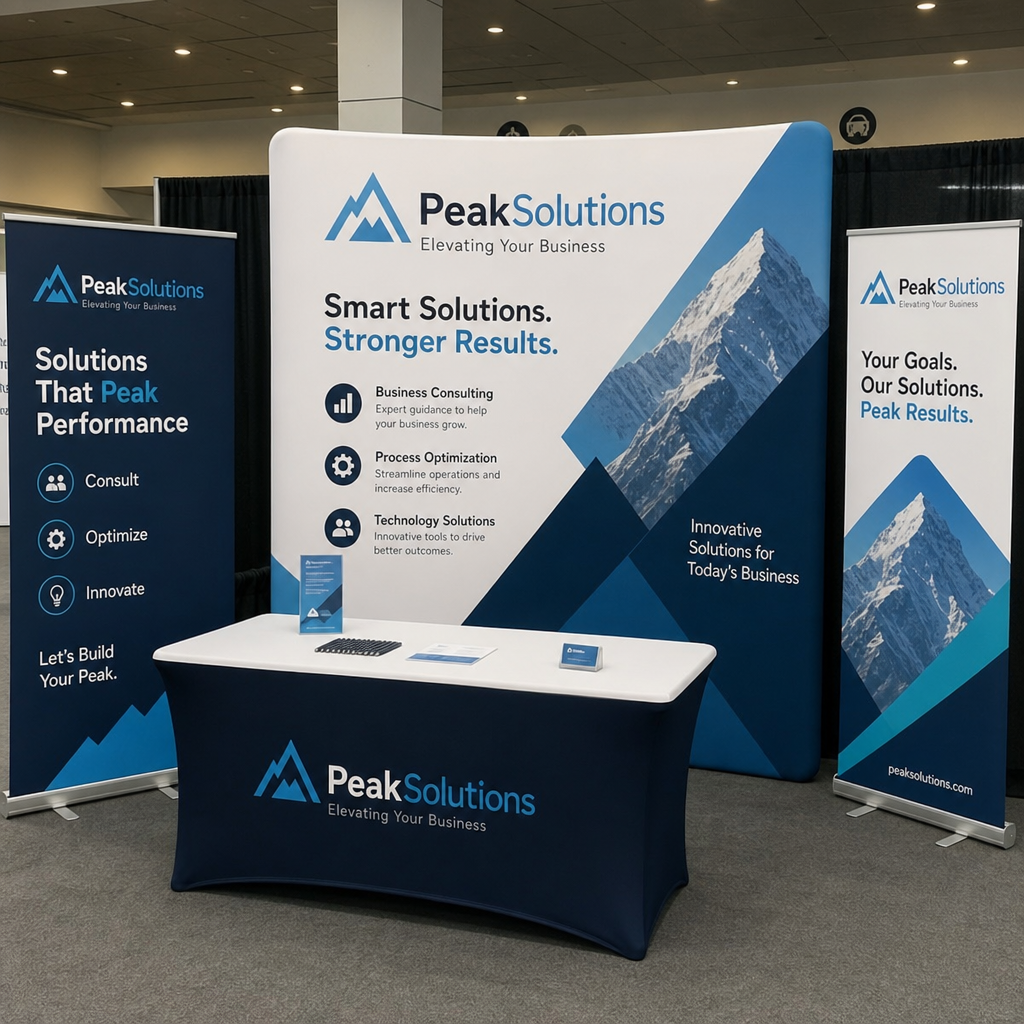
Pop-up displays are a popular choice when you need a larger visual presence without building a complex booth environment. They work well as branded back walls, photo-friendly backgrounds, presentation zones, or visual anchors behind a table. Because they create a broad graphic surface, they are especially useful for communicating brand identity at a glance.
The best pop-up display designs are bold rather than crowded. A clean headline, strong image, and clear logo placement usually perform better than dense paragraphs or a long list of services. If someone can understand your offer from several steps away, the display is doing its job.
Pop-ups are also useful for businesses that attend multiple events. A well-designed backdrop can be paired with smaller signs, literature, tabletop pieces, or product displays to create different booth setups. That flexibility makes them a smart foundation for teams that need a consistent brand presence across changing venues.
When should you use retractable banners?
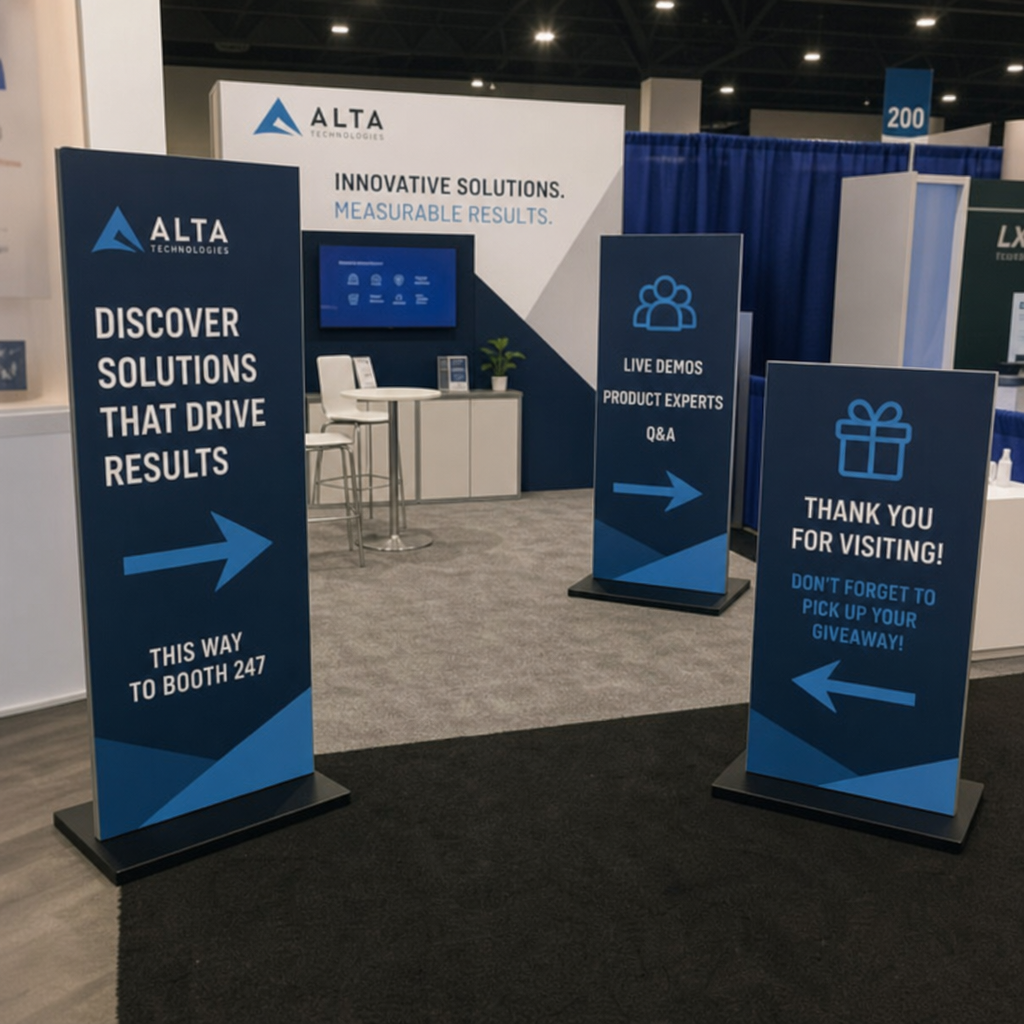
Retractable banners are ideal when you need portable, focused messaging that can be set up quickly and moved easily. They are especially useful for highlighting a product, promoting a service, directing traffic, or adding height and visibility to a smaller booth.
Because retractable banners have a narrow vertical format, message discipline is important. Use a strong headline near eye level, place the most important visual or benefit in the center, and keep supporting text brief. The bottom area should be treated carefully because it may be harder to see in crowded aisles.
Retractable banners can also work as a modular system. For example, one banner might introduce your brand, another might explain your core service, and a third might promote a limited event offer. Together, they create a flexible display without requiring a large booth structure.
To get more value from retractable banners, consider these practical uses:
- Place one near the aisle to catch attention before visitors reach your table.
- Use one inside the booth to explain a demo or process.
- Position one near a lead capture station with a clear call to action.
- Bring a backup banner for breakout rooms, speaking sessions, or lobby placement when allowed.
Freestanding systems add structure and flexibility
Freestanding display systems help create a more dimensional booth experience. They can divide space, frame a product area, support directional signage, or add visual weight where a flat backdrop is not enough. For exhibitors who want a booth that feels intentional without becoming overly complicated, freestanding options can be a strong solution.
These systems are useful when your booth needs zones. One area might welcome visitors, another might show product information, and another might support one-on-one conversations. Freestanding displays can help define those areas while keeping the booth open and easy to navigate.
They are also helpful when venue rules, wall limitations, or booth layouts make traditional hanging or mounted signs difficult. Since the display stands on its own, you gain more control over placement. That can be valuable in crowded exhibit halls where sightlines, neighboring booths, and aisle direction all affect visibility.
Design details that turn attention into leads
Attracting attention is only the first step. The display also needs to support lead generation by making the next action obvious. If visitors like what they see but do not know what to do next, the booth may create interest without producing measurable results.
Strong trade show graphics usually include:
- A headline that states the main benefit clearly.
- Visuals that match the audience and offer.
- A limited number of supporting points.
- A clear call to action, such as “Ask for a demo” or “Scan to get started.”
- Consistent branding across all display pieces.
- Enough open space so the design feels confident, not crowded.
It also helps to design around real booth behavior. People may view your display from an angle, stand close while talking to your team, or block part of the graphics during busy periods. Important information should not depend on one tiny detail or one hidden corner.
Trade show display planning and design: pop-up displays, retractable banners, and freestanding systems works best when every piece has a job. A pop-up can build brand presence, retractable banners can highlight specific messages, and freestanding systems can shape the booth environment. Together, they create a display that feels coordinated rather than assembled at the last minute.
A simple path to a better booth
Before choosing materials, sizes, or layouts, map the visitor journey. Imagine someone noticing your booth, approaching it, asking a question, and deciding whether to share contact information. Each display element should support one part of that journey.
A simple planning sequence looks like this:
- Clarify the event goal and audience.
- Decide the main message visitors should remember.
- Choose the display types that fit your booth size and setup needs.
- Create a visual hierarchy with the most important message first.
- Add lead capture prompts where they are easy to see and act on.
- Review the full setup as one coordinated brand experience.
This process keeps the focus on results. It also helps avoid overbuying, under-planning, or creating graphics that look attractive but do not help your team connect with prospects.
Make every event easier to enter and easier to remember
A trade show booth should feel welcoming, clear, and purposeful. Pop-up displays, retractable banners, and freestanding systems each bring different strengths, but the best results come from choosing them around your message, space, and lead goals.
ProPrint Signs can help turn those moving parts into a practical display plan that looks professional and supports better conversations. When your booth is easy to understand and easy to approach, your team can spend less time explaining who you are and more time building the relationships that matter.