Your business sign works every day, even when your team is off the clock. When it is faded, cracked, flickering, storm-damaged, or simply no longer aligned with your brand, the right next step is not always obvious. This guide from ProPrint Signs walks through how to decide between repairing or replacing damaged, outdated, or malfunctioning signage so you can protect visibility, control costs, and make a confident choice.
Should you repair or replace your sign?
You should repair a sign when the structure is sound, the problem is isolated, and the finished result will still represent your business well. You should consider replacement when damage is widespread, the design is outdated, the sign is no longer code-friendly, or repeated fixes are costing more than a long-term solution. The best decision balances safety, appearance, performance, budget, and how important the sign is to customer traffic.
A sign is not just a piece of branding; it is often the first impression a customer gets before they walk in, call, or search for more information. A quick patch may be enough for a minor issue, but a worn-out or unreliable sign can quietly make a business look neglected. That is why the smartest approach is to evaluate both the visible problem and the business purpose behind the sign.
Start with the condition of the sign
The physical condition of the sign is the first place to look. If the sign cabinet, frame, face, mounting hardware, or support structure is still in good shape, repair may be practical. Replacing a panel, fixing wiring, refreshing graphics, or correcting a small installation issue can often restore the sign without starting from scratch.
However, damage that affects stability or safety deserves a more serious review. Cracked faces, loose mounting points, rust, water intrusion, exposed electrical components, or warped materials may indicate that the sign is failing beyond the surface. In those cases, replacing the sign may reduce risk and prevent another repair call soon after the first one.
Look for these signs that repair may be enough:
- One broken section, panel, letter, or component
- Minor fading or surface wear on an otherwise solid sign
- A lighting issue limited to bulbs, LEDs, transformers, or wiring
- Damage from a recent event, such as wind or impact, that did not affect the structure
- A sign design that still matches your current brand and location
Replacement becomes more likely when you notice:
- Frequent outages or recurring malfunctions
- Heavy rust, cracking, bending, or water damage
- A sign that looks outdated even when cleaned or repaired
- Poor visibility from the road, sidewalk, or parking lot
- Materials that have reached the end of their useful life
Cost is important, but value matters more
Repair often has a lower upfront cost, which makes it attractive when the issue is simple and the sign still performs well. If a technician can resolve the problem quickly and the sign will continue to serve your business, repair can be the most efficient option. It also helps avoid unnecessary waste when only one part of the sign needs attention.
Replacement may cost more at the beginning, but it can deliver stronger long-term value when the existing sign is no longer helping your business. A new sign can improve readability, update your brand image, support better illumination, and reduce the chance of repeat service visits. If you are spending money on the same sign again and again, those repair costs should be compared against the benefits of a fresh, dependable installation.
The practical way to decide between repairing or replacing damaged, outdated, or malfunctioning signage is to ask what the sign will look like and how it will function after the work is complete. If the repair only makes a weak sign “good enough,” replacement may be the better business decision.
What does your sign say about your brand?
Your sign should make your business look open, professional, and easy to find. If the sign is dim, faded, mismatched, or visibly patched, it can send the wrong message even if your products or services are excellent. Customers may not consciously analyze your signage, but they do notice when a storefront feels current, clean, and trustworthy.
Brand changes are also a major reason to replace rather than repair. If your logo, colors, services, ownership, or positioning have changed, fixing the old sign may preserve a look you no longer want. Replacement gives you the chance to align your physical location with your current marketing, website, vehicles, printed materials, and customer experience.
For businesses that depend on walk-in traffic, visibility should weigh heavily in the decision. A sign that is technically functional but hard to read at distance, poorly placed, or not illuminated effectively may be costing opportunities. In that situation, a replacement can solve a marketing problem, not just a maintenance problem.
Electrical and illuminated signs need careful diagnosis
When a lighted sign flickers, dims, or stops working, the problem may be simple, but it should still be diagnosed properly. The issue could involve lamps, LEDs, power supplies, wiring, photocells, timers, or moisture inside the sign. Repair may be the right choice if the electrical system is accessible, safe, and limited to replaceable components.
If the sign has repeated lighting failures, outdated components, or water-related electrical concerns, replacement may be safer and more practical. Older illuminated signs can also be less consistent in brightness and appearance, which affects how the business looks after dark. A professional inspection helps separate a small service issue from a larger system problem.
Never ignore electrical problems because the sign still “mostly works.” Flickering, buzzing, exposed wiring, or intermittent operation can point to issues that need prompt attention. ProPrint Signs can help assess the sign’s condition and recommend a sensible path without turning every service call into an unnecessary replacement.
Use a simple decision checklist
Before choosing repair or replacement, work through a few practical questions. This keeps the decision focused on business impact rather than guesswork.
- Is the sign safe? If mounting, structure, or electrical safety is in question, address that first.
- Is the damage isolated? A single broken part usually supports repair; widespread wear may support replacement.
- Does the sign still fit the brand? If the design feels outdated, repair may not solve the real issue.
- How often has it needed service? Repeated problems can make replacement more cost-effective over time.
- Is visibility strong enough? If people struggle to notice or read the sign, consider a redesign.
- Will the repair look professional? A fix should restore confidence, not leave obvious patches.
- Are you planning other updates? Renovations, rebranding, or a new storefront layout may make replacement timely.
These questions make the trade-offs clearer. A sign that is safe, current, and mostly healthy is often worth repairing. A sign that is unsafe, unattractive, unreliable, or strategically outdated is usually a better candidate for replacement.
The right answer depends on the sign’s role
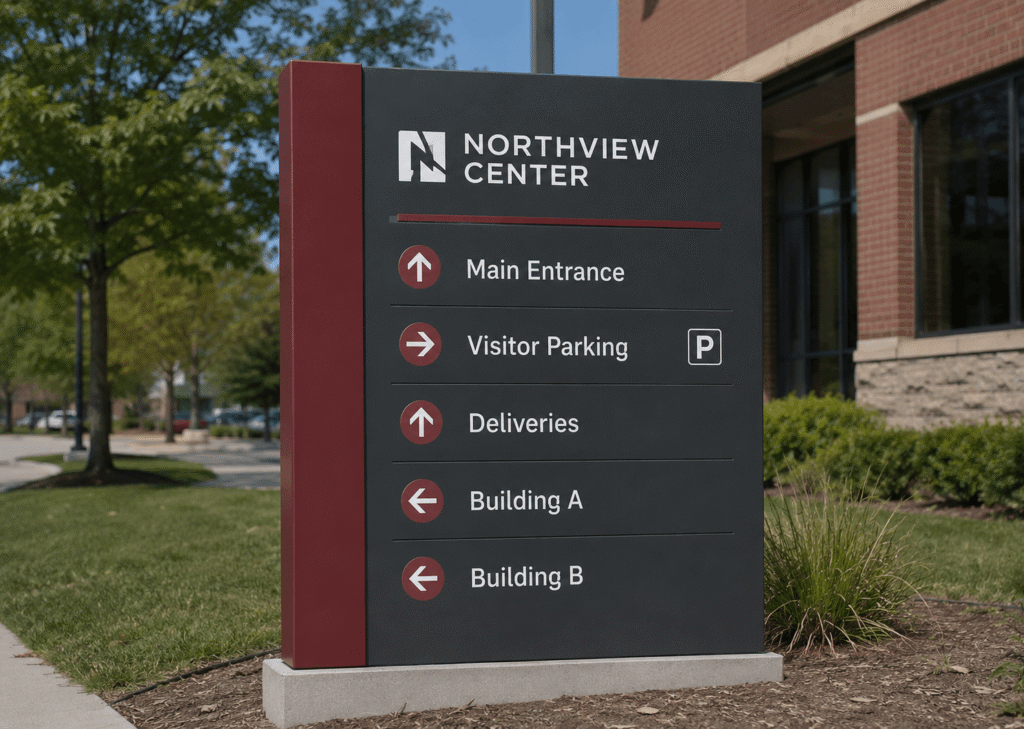
Not every sign carries the same weight. A small directional sign, a temporary banner, a monument sign, and a primary storefront sign all have different jobs. The more important the sign is to attracting customers, guiding visitors, or establishing credibility, the more carefully you should evaluate whether repair will truly deliver the result you need.
Think about how customers interact with the sign. Is it helping them find you from the road? Does it make your entrance clear? Does it reinforce the quality of your business? If the answer is no, replacement may create more value than continuing to maintain something that no longer performs.
Make the decision with confidence
Repair is the smart move when it restores a good sign to reliable condition. Replacement is the smart move when the existing sign is holding your business back, creating safety concerns, or requiring too many temporary fixes. The goal is not to choose the cheapest option or the biggest project; it is to choose the option that supports your visibility, brand, and long-term budget.
If you are unsure how to decide between repairing or replacing damaged, outdated, or malfunctioning signage, start with a professional evaluation. ProPrint Signs can help you look at condition, appearance, lighting, placement, and practical next steps so your signage keeps working as hard as your business does.